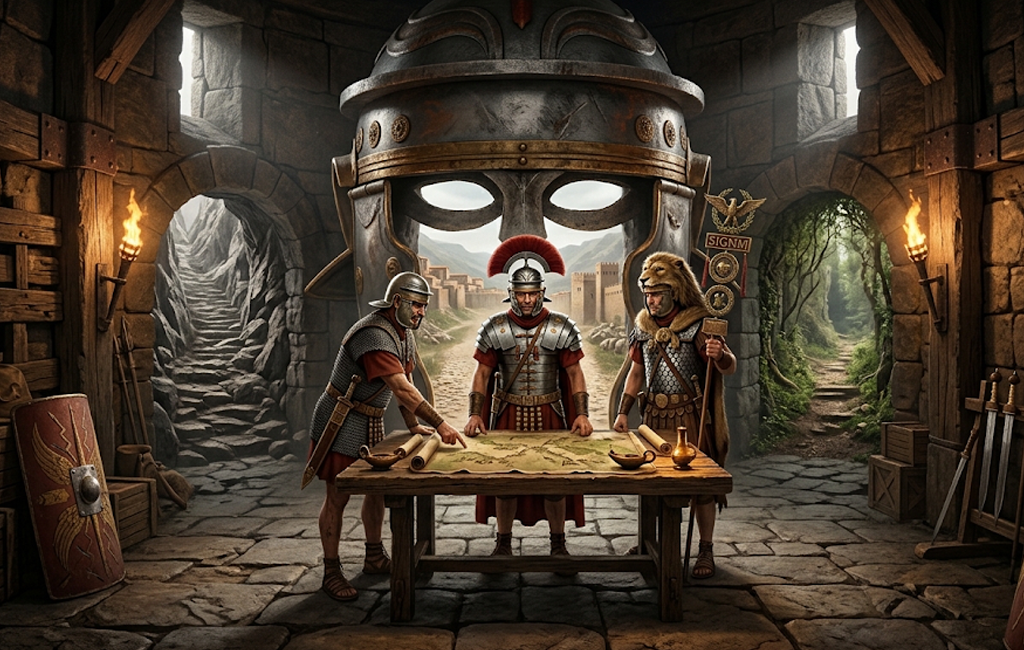
Stories set in the past let readers walk streets that no longer exist, share meals under customs long abandoned, and watch ordinary people face pressures their descendants can barely imagine. That is the appeal of historical fiction: invented characters placed inside a real time and place, with enough period detail to make the setting feel lived in.
This guide explains how the genre works, outlines the elements that define a good historical novel, and surveys the kinds of stories readers can find. It also offers a curated reading list that begins with A Centurion: Different Roads, Same Direction by Darrell Smith, followed by novels from other eras and regions.
What Is Historical Fiction and How Does It Work?
At its simplest, historical fiction pairs fiction based on historical settings with characters who never existed or whose inner lives the author has imagined. The period is recognizable, whether it is first-century Judea, Tudor England, or the Second World War, and the events of that period shape what the characters can and cannot do. A reader should finish with a sense of the era as well as the plot.
Real history and invention work together here. Authors may use documented events as a backdrop, place historical characters at the edges of the action, or leave famous figures offstage while fictional people absorb the consequences. Atmosphere comes from small things: how people speak, what they eat, who they answer to, and what they fear. Take the historical context away and the story loses its pressure.
Key Elements That Define a Historical Novel
Most historical novels share a handful of traits. A clearly established setting comes first, since readers should know when and where they are within a few pages. Period-appropriate customs, language, and social expectations follow. A character in ancient Rome answers to patrons, family, and rank in ways a modern reader would not assume.
Fictional characters should be shaped by their time, with choices that make sense because of the laws, beliefs, and limits around them. Real events, such as a war, a coronation, or a plague, may serve as background or drive the plot itself, and cultural, political, religious, or social conflicts often supply the tension.
The last element is balance. Authors invent dialogue and private moments, so the strongest historical fiction keeps its inventions believable within what is known. Weighing these elements is a practical way to judge the best historical book on fiction for your own taste.
Different Types of Historical Stories Readers Can Explore
Ancient Settings
Novels set among ancient civilizations, from Roman history to earlier empires, focus on power, family, and survival under systems far from our own. The scale is often large, but the best of them stay close to individual lives.
Biblical and Religious Stories
Biblical historical fiction and other religious historical novels place characters near the events and traditions of faith, exploring belief, doubt, and devotion in specific settings. They suit readers who like spiritual questions anchored in a concrete period.
Medieval, Military, and Political Stories
Medieval novels bring cathedrals, castles, and feudal obligations. Military history fiction follows soldiers and civilians through war, while royal and political stories examine courts and ambition. Each offers a different pace, from battlefield tension to quiet intrigue.
Family Sagas
Family sagas follow past generations across decades, showing how migration, war, and changing customs shape a household. Choosing among these categories is the first step toward finding the best historical book on fiction for your mood.
Historical Fiction Books Worth Exploring
The six novels below cover different periods, regions, and storytelling approaches, so newcomers and seasoned readers alike should find a place to start. For anyone searching for the best historical book on fiction with faith at its center, the list opens with a title that treats belief as its central question.
1. A Centurion: Different Roads, Same Direction by Darrell Smith
This is historical fiction with strong religious and biblical themes, and it is not a conventional Roman military adventure. It follows four Roman centurions along separate roads that wind through German forests, shipwrecked seas, slave markets, and finally the hill called Golgotha. Each man carries a private ledger of debts owed, men lost, and orders that cost more than they were worth.
2. I, Claudius by Robert Graves
Told in the voice of the Roman emperor Claudius, this novel looks back on the intrigues of the imperial family from inside the household. Graves fills the narration with rivalry, ambition, and quiet survival, making early imperial Rome feel intimate rather than monumental. It is a strong choice for readers who want Roman history seen through a single, observant narrator.
3. The Pillars of the Earth by Ken Follett
Set in twelfth-century England, this novel follows the building of a cathedral and the lives of the people whose fortunes depend on it. Follett weaves construction, church power, and political unrest into a long, absorbing story. It works well for readers who enjoy medieval settings and wide canvases where craft and ambition collide.
4. Wolf Hall by Hilary Mantel
Mantel retells the rise of Thomas Cromwell in the court of Henry VIII, following a lowborn man who learns how power really operates. The present-tense narration keeps readers close to Cromwell’s thoughts, and the Tudor setting hums with religious and political tension. Choose it for literary fiction with close character study and a royal court at its center.
5. All the Light We Cannot See by Anthony Doerr
Doerr alternates between a blind French girl and a German boy whose paths are shaped by the Second World War. Short chapters and careful detail carry readers through occupied France and wartime Germany. It suits those who prefer military history seen through civilian and youthful perspectives rather than from the battlefield.
6. Pachinko by Min Jin Lee
Spanning much of the twentieth century, this family saga follows a Korean family as they build lives in Japan across several generations. Lee examines identity, discrimination, and perseverance through the choices of ordinary people. It is an excellent pick for readers curious about cultural traditions and how large events reach into everyday households.
How to Choose the Right Historical Novel
Begin with a period that already interests you. Someone fascinated by ancient Rome will likely enjoy a Roman setting more than a vague recommendation, and curiosity makes unfamiliar details easier to absorb. Next, decide how much history you want. Some readers prefer fact-focused storytelling with detailed events, while others favor character-driven historical fiction where the era stays in the background. Both can lead to the best historical book on fiction for the right reader.
Geography matters too. Trying different cultural settings keeps the genre fresh and widens what you know about other regions. Look for authors who research their backgrounds carefully, which often shows in author notes or acknowledgments. Then consider the themes that pull you in, whether religious, political, military, or personal. A good match balances historical context with characters you care about.
Finally, give a book a fair first chapter. If the setting feels vivid and the people feel real, you have probably found your pace. It also helps to ask what you want from the best historical book on fiction in your own reading life: education, escape, or emotional depth.
Why Historical Storytelling Still Matters
Novels set in the past introduce readers to unfamiliar periods and spark curiosity about cultures and traditions that textbooks can make feel distant. They also explore universal human experiences, such as loyalty, grief, and ambition, through different circumstances. Seeing how beliefs, relationships, and societies have changed over time helps readers consider their own moment more carefully. Good historical fiction often leaves people curious enough to pick up a nonfiction book afterward.
Why this matters: historical novels work when the author understands the period well enough to make its customs and pressures believable. Readers benefit from separating documented events from invented scenes, which keeps fiction from replacing the record. Believable characters then give a setting emotional weight, a quality worth weighing when judging the best historical book on fiction.
Final Thoughts
Historical fiction gives readers a way to visit other eras through people who feel real, combining period detail with human choices. Its range, from ancient civilizations to modern family sagas, means there is almost always a setting worth trying.
A Centurion: Different Roads, Same Direction by Darrell Smith shows how the genre can carry larger questions. Its four centurions bring faith, sacrifice, duty, and personal discovery together within a Roman world, which reflects the wider appeal of historical storytelling. For many readers, the best historical book on fiction is simply the one that makes a distant time matter to them. Pick a period that interests you, open a historical novel, and see where it takes you.